

(And Why It’s Not That Simple)
A common question we hear is:
“What should my testosterone level be?”
The answer isn’t as straightforward as a single number.
Understanding Testosterone Levels
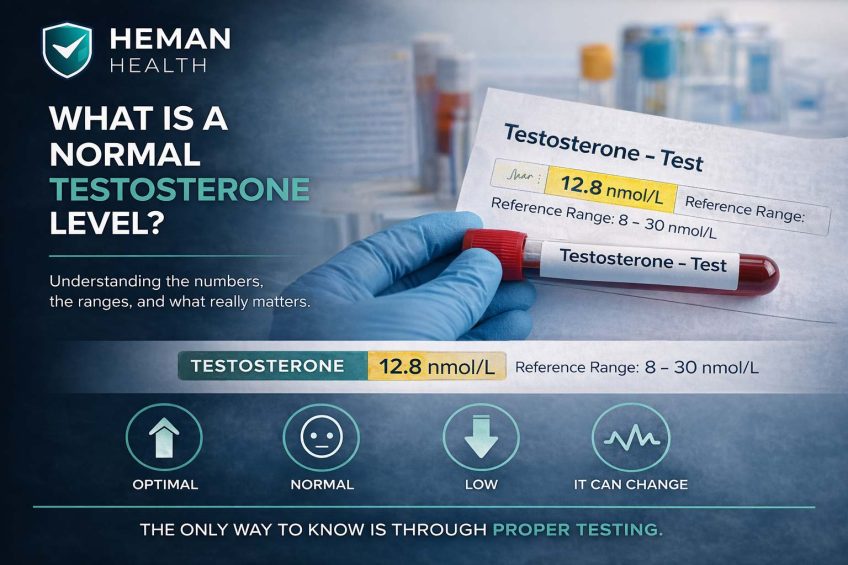
Testosterone is measured through a blood test, usually in the morning when levels are at their highest. In the UK, normal ranges typically fall between:
👉 ~8 to 30 nmol/L
However, this range can vary slightly depending on the laboratory.
Why “Normal” Doesn’t Always Mean Optimal
This is where things get confusing. You can be told your testosterone is “normal”…
…but still feel:
- Tired all the time
- Low in mood
- Struggling with libido
- Finding it harder to maintain muscle
👉 That’s because “normal” simply means within a wide reference range—not necessarily what is optimal for you.
Symptoms Matter as Much as Numbers
A key principle in men’s health is:
We don’t treat numbers—we treat patients.
For example:
One man at 10 nmol/L may feel fine | Another at the same level may have significant symptoms
This is why both are important:
✔ Blood test results
✔ Your symptoms
Why a Single Test Isn’t Enough
Testosterone levels can fluctuate depending on:
- Time of day
- Sleep quality
- Stress
- Illness
- Lifestyle factors
👉 This is why proper assessment often includes:
- Morning testing
- Full hormone profile
- Clinical review
More Than Just Testosterone
Looking at testosterone alone is not enough. A proper assessment should also consider:
- SHBG (affects available testosterone)
- Free Testosterone (active form)
- LH & FSH (how your body is signalling hormone production)
- Oestradiol (important balance)
👉 This gives a complete picture—not just a single number.
When Should You Get Checked?
You should consider testing if you are experiencing:
- Ongoing fatigue
- Reduced libido
- Erectile dysfunction
- Low mood
- Difficulty maintaining muscle
- Increased body fat
Especially if these symptoms have been present for several months.
What Happens Next?
If your testosterone is found to be low—and your symptoms match—further discussion about management can take place. This may include:
- Lifestyle optimisation
- Further investigation
- Or treatment where appropriate
The Key Takeaway
There is no single “perfect” testosterone level.
👉 What matters is:
- Your symptoms
- A proper blood test
- A full clinical assessment
About HEMAN Health
HEMAN Health provides structured, clinically-led testosterone assessments, ensuring safe and appropriate care for every patient.
Book a Consultation
If you would like to check your levels or discuss symptoms: